
by Fernanda Menezes de Souza
Project Manager Cesla
Everything we live in today is fast-paced. Moments quickly become memories, the day goes by in the blink of an eye, and so do the challenges of everyday life. Information, news, and updates occur and expire without us being able to catch them and nourish ourselves. A flood of fast-moving information that permeates our lives, everything architected and structured to be this way. With this, the way we think and develop solutions also needed to go through renovations and the creation of new techniques. Today, solutions are found and developed in such an agile and natural way that when we realize, we can no longer live without them. And what does speed and this "information overload" have to do with Lean Inception? Everything. The word lean means "lean" and its philosophy fits the agile methodologies, which is the opposite of "information overload". Based on segmentation, that is, starting from small actions, it is possible to work with a large amount of information in a fast, effective and compartmentalized way. Thus, Lean Inception brings together complex problems, short delivery time and high value, from a framework that enables learning, building and measuring in a cyclical way.
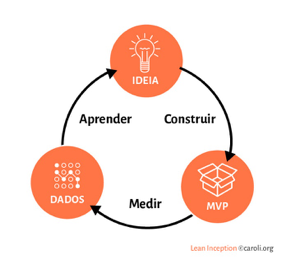
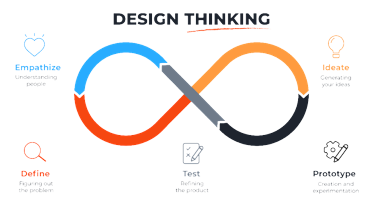
You might be thinking, "Ok, deliver fast and deliver a lot, but what in fact is Lean Inception and how does it happen?". Well, Lean Inception is a five-day workshop that mixes agile with Design Thinking methodologies, where we try to understand everything about the problem to find the best solution and structure how to develop great value in a short time and, bonus: consistently!
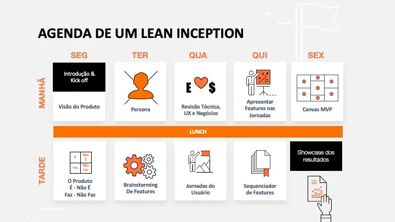
To be clearer, let's think about some cases: Case 1: You've probably used iFood, maybe you use iFood a LOT (I won't judge you), but do you remember, maybe in mid-2017 or 2018, when there was no "iFood Marketplace"? You could be in your house, starving, not having anything to eat, so you would think "I'll order an iFood". Ok, fine... but what if you wanted to prepare something, or just needed some Parmesan cheese that you forgot to buy when you went to the supermarket, and unfortunately there is no way to buy it without going back there. Soon the whole experience of a super macaroni was ruined. Now you have the Ifood Mercado for such situations. Case 2: Imagine... you are in dire need of a college book that you have left at your parents' house, which is not far away, at most 20 minutes from you, but no one can bring it and you are stuck at work, with no way to pick it up. Who will help you? Yes, that's who, Uber Delivery. In both cases we see examples of companies that launched their products in a functional way and improved them little by little, adding new features as the products developed. Now think of another scenario, much simpler this time: one product and two different methodologies. For both methodologies we have a deadline of one year to finish the project. In the first, I make one delivery per month, perform usability tests, and make sure I am developing what my client asked me to. In the second, I spend the first eight months developing, use two months for testing and the last two for correction.
Which of these methodologies do you think will be more successful? I bet on the first one, because it allows me to adapt, correct, and develop solutions that actually meet the problem we seek to solve. This is the proposal of Lean Inception. With Lean Inception we plan and develop small deliverables in a constant way and with high value to the client, thus ensuring that we are on the right track and, if not, we can fix it quickly.
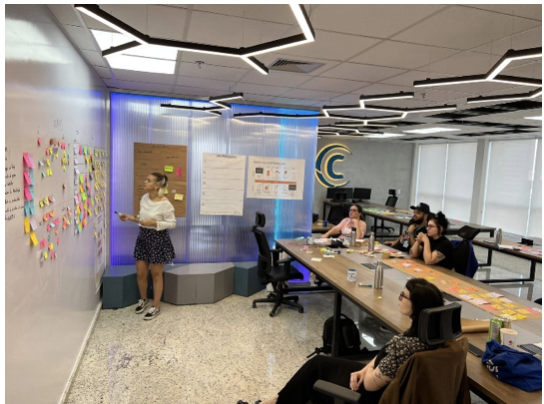
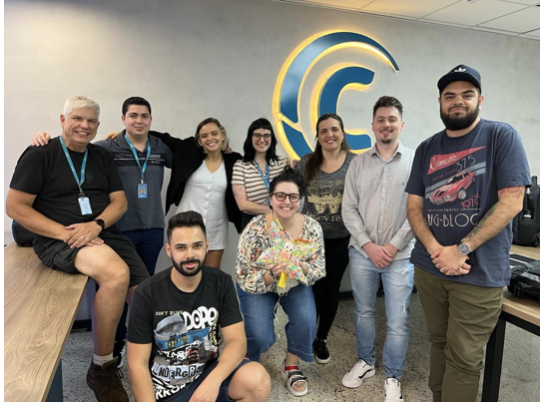
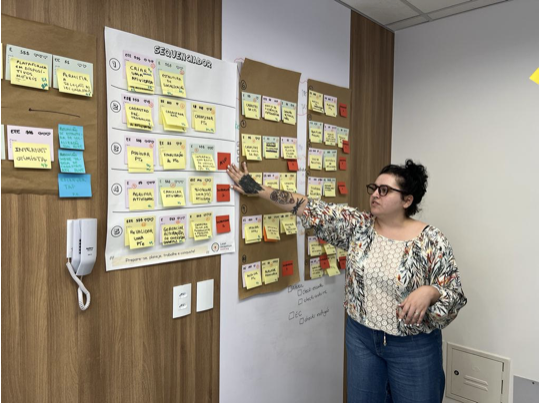
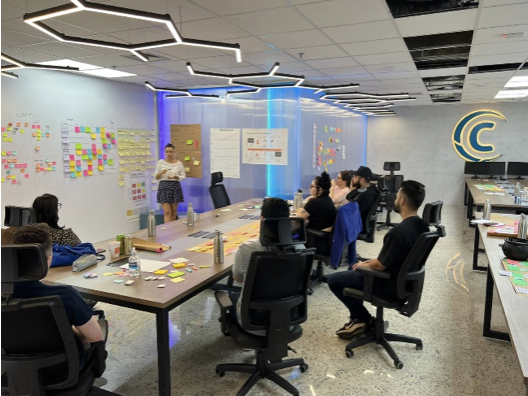
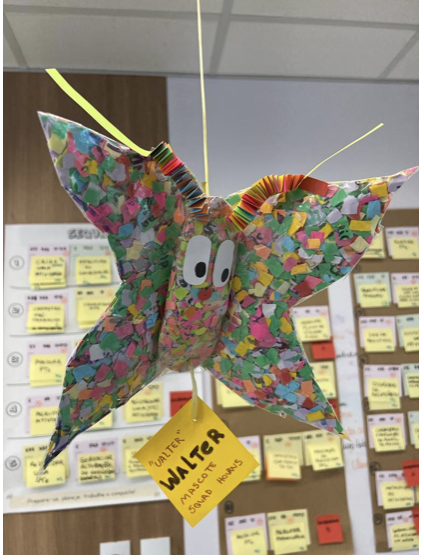
Here at Cesla we have proudly adopted this workshop to develop our products. Currently, we have two projects that started from Lean Inception, the Hive that will replace our beloved EPS Management, and the Horus that will be the new APR/PTe. The latter, I had the opportunity to teach the whole workshop, and I can say with confidence that after a week immersed in the product development, the whole team left the company with clarity of the product, excited about the MVP challenge, and with an incredible synergy. Figure 4: personal file.
To conclude, I add here a phrase that drives me and elucidates well the proposed idea: "fall in love with the problem and not the solution", because, in this way, we can improve ourselves in developing the best product in the most flexible, technological and assertive way, this is the focus of Lean Inception. Think about this sentence and never give up on complex problems, because usually all that is needed is a little simplicity and a constant learning process.